The search for the ideal television often comes down to choosing between display technologies. Traditional LCD panels continue to evolve to bridge the gap with self-emissive OLED screens. With the release of the Sony Bravia 9 II (XR90M2 series), Sony introduces its proprietary RGB Backlight Master Drive Pro technology to establish a new benchmark for Mini-LED performance. If you are wondering whether the Sony Bravia 9 II is worth the investment, the short answer is yes, it is arguably the best non-OLED display on the market, though its steep price point creates strong competition from OLED alternatives.
Key Performance Breakdown
1. Picture Quality & True RGB Backlighting
Equipped with individual red, green, and blue LEDs in its backlight array, the Bravia 9 II delivers exceptionally high color accuracy and coverage.
-
Color Coverage: Reaches 91.86% of the BT.2020 color gamut, delivering vast color volume without the color shifts or green tints seen on competing RGB panels.
-
Peak Brightness: Achieves a massive peak white luminance exceeding 3,200 nits in 4K HDR testing, making it ideal for bright, sunlit rooms.
-
Contrast & Blooming Control: Local dimming algorithms effectively manage dark scenes, keeping light halos to a minimum while maintaining high shadow detail.
2. Gaming Performance
While dedicated gamers will find fast response times in the proper picture settings, selecting the correct mode is critical:
-
Game Mode: Yields an exceptionally fast input lag of 10.9 ms (1080p) and 10.33 ms (4K HDR).
-
Cinema / Professional Modes: Introduce input lag up to 180 ms. Switching manually to Game Mode when launching a console session is required to ensure smooth gameplay.
READ ALSO: Honor Robot Phone Gimbal and Camera Motion Stabilization
The unboxing sets the tone immediately. The box is huge. The phone sits right on top. Cables and chargers fill the space underneath. But one item stands out: a strange-looking cover. More on that later. Using the phone feels unusual from the start. Slide the protective cover open. Tap the button below the camera app. Then watch the gimbal pop out in a wild, almost theatrical animation. It’s fully calibrated the moment it appears. Nothing else on the market looks quite like this.
3. Smart Features & Design
-
Mirage Stand: A design touch inspired by classic mid-2000s Sony models featuring translucent accents.
-
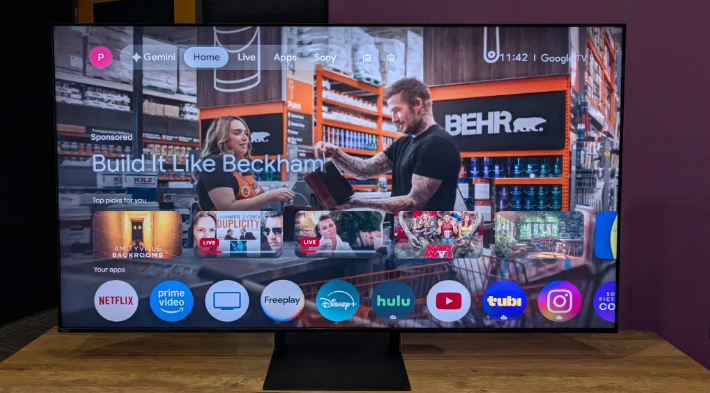
Google TV Integration: Provides wide streaming support with built-in voice controls and Google Gemini assistance, alongside dual-tier picture setup menus.
-
Anti-Reflective Panel: Uses Immersive Black Screen Pro coating to absorb heavy ambient glare, though this coating is omitted on the ultra-large 115-inch model.
Sony Bravia 9 II Technical Benchmark Test Results
| Performance Metric | Result / Measurement | Rating / Assessment |
| SDR Peak White Luminance | 2930 nits | Excellent |
| 4K HDR Peak Luminance (10% Window) | 3229 nits | Excellent |
| BT.2020 Color Gamut Coverage | 91.86% | Excellent |
| UHDA / P3 Gamut Coverage | 99.17% | Excellent |
| SDR Black Level | 0.001 nits | Excellent |
| Input Lag (Game Mode) | ~10.3 to 10.9 ms | Very Good |
Should You Buy the Sony Bravia 9 II?
Buy it if:
-
You have a bright living space where high peak brightness and anti-reflection treatment are necessary.
-
You prefer non-OLED panel durability without sacrificing color accuracy or contrast.
-
You want high-end processing, smooth motion handling, and robust HDR playback.
Consider alternatives if:
-
You prioritize cinematic viewing in pitch-black room conditions, where comparable flagship OLEDs (such as the LG G6 or Sony Bravia 8 II) offer infinite contrast at a lower retail price.
-
You are working with a strict budget, as the advanced RGB LED manufacturing process carries a premium price tag.
About the Author