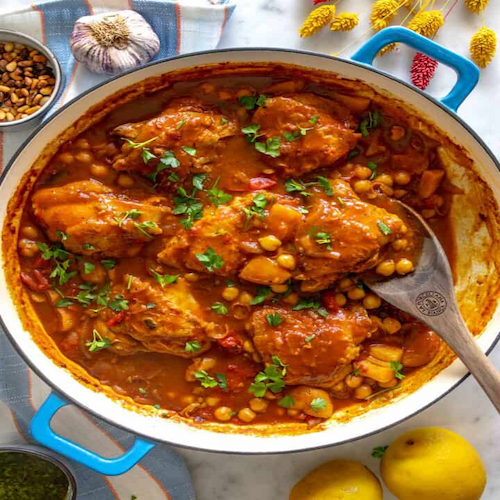
Chicken-tagine
Tagine is more than a dish. It is a reflection of Morocco’s history, culture, and way of life. Rich, slow-cooked, and deeply aromatic, it offers a taste of North Africa that unfolds in layers. Although couscous is Morocco’s most famous food export, it usually plays a supporting role. When served with tagine, couscous becomes a companion rather than the star. The main attraction is the stew itself, known for its sweet and spicy flavors and its long, gentle cooking process.
The origins of tagine stretch far back in time. A dish resembling it appears in One Thousand and One Nights, a collection of Arab tales from the ninth century. Its deeper roots lie among the Berber communities of North Africa. The name comes from the Berber word tazin, meaning a shallow earthen pot. Today, the word “tagine” refers to both the cooking vessel and the food prepared in it. The pot is wide and shallow, topped with a tall, cone-shaped lid. This design traps steam during cooking, keeping the ingredients moist and tender. The result is a stew with soft textures and concentrated flavor.
What Is Tagine?
Tagines can be made with meat, fish, or vegetables. Most begin with a base of onions, pulses such as chickpeas or lentils, and a blend of spices. Ginger, cinnamon, saffron, and paprika are common, along with harissa for heat. Toward the end of cooking, sweet elements like dried fruit or honey are added.
READ ALSO: How To Make Delicious Bread Pudding
Balance is essential. Sweetness must be offset with salt and spice to avoid overpowering the dish. Just before serving, tagines are often finished with olives, preserved lemons, nuts, fresh herbs, or even boiled eggs. Traditionally, the stew is eaten with khobz, a flatbread used to scoop up the sauce. Today, it is more commonly served with couscous.
Tagine also tells the story of Morocco’s past. Spices arrived from the Middle East during Arab expansions in the seventh century. Later, when the Moors returned to Morocco after leaving Spain in the fifteenth century, they brought ingredients such as olives, olive oil, and paprika. Each influence added depth to the dish.
READ ALSO: Know Your Brownie: A Dessert You Can’t Stop Dreaming About
In Moroccan cities like Fez and Marrakech, market stalls overflow with colorful tagines stacked high. In Safi, the country’s pottery center, a giant tagine pot stands as a symbol of tradition. Built in 1999, it was used to cook a massive meal of sardines for hundreds of people.
Tagine is not limited to restaurants or markets. It can be made at home using cast iron or traditional earthenware pots. Unglazed clay is preferred by many, as it absorbs flavors over time. Decorative pots, however, are better admired than used.
Warm, fragrant, and deeply comforting, tagine brings people together. It is a dish meant for sharing, best enjoyed slowly, and always rich with history.
About the Author